
Searchable.com publishes a steady run of articles on how brands get found by AI answer engines, and several of them push back on popular shortcuts. Some of that advice matches what Google and outside researchers say. Some is the company’s own reading. Below are four common myths, each checked against both.
| Myth | What the sources say |
|---|---|
| AI answers need special markup | Google says there are no additional requirements or special optimizations for AI Overviews or AI Mode |
| Every site needs an llms.txt file | It is a 2024 proposal, and Searchable’s AI Overviews article says it is not needed there |
| There is one AI rank to track | Searchable’s tracking article says AI answers have no fixed positions |
| Backlinks decide who gets cited | An Ahrefs study cited in a Searchable article found web mentions correlated more strongly with AI visibility |
Special Markup Is Not a Ticket Into AI Answers
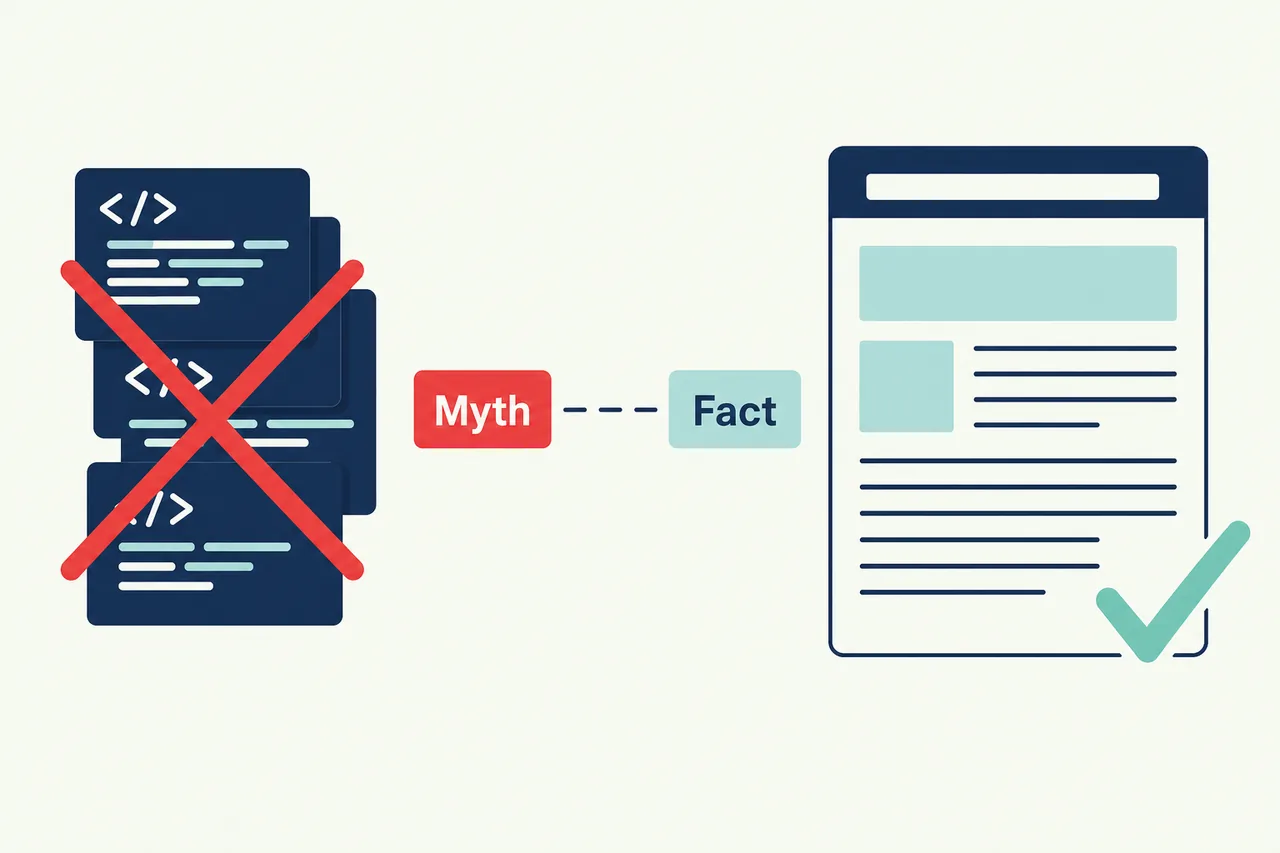
The myth is simple. Add the right schema, chunk the page a certain way, and AI engines will pick it up.
Why the myth persists
Part of the confusion is the word “structure”. Searchable’s article on AEO defines the practice as “structuring your content so that AI answer engines like ChatGPT, Perplexity, and Google’s AI Overviews can find, understand, and cite it”. Structure there means how the writing is organised. It does not mean code.
What Google actually requires
Google disagrees in writing. Its documentation on AI features and your website states: “There are no additional requirements to appear in AI Overviews or AI Mode, nor other special optimizations necessary.”
Note. Google’s baseline is ordinary eligibility. A page must be indexed and eligible to show with a snippet. Nothing more is listed.
Searchable’s article on ranking in AI Overviews lands in the same place. It says llms.txt, schema and chunking are not needed for AI Overviews, and points instead to unique, non-commodity content with the answer placed early.
Caveat. That does not make structured data useless. Google’s May 2025 guidance says structured data must match the visible content of a page. That is a rule about accuracy, not a shortcut into answers.
An llms.txt File Is a Proposal, Not a Requirement
llms.txt sounds official. It is not a standard. It is a proposal, and the details are short.
| Detail | llms.txt |
|---|---|
| Proposed by | Jeremy Howard |
| Date proposed | 3 September 2024 |
| Where it lives | A markdown file at /llms.txt |
| Stated purpose | To help agents use a site |
| Searchable’s view | Not needed for AI Overviews |
Where the myth overreaches
The proposal itself, published at llmstxt.org, describes a helper for agents. The myth turns that into a requirement. Google’s AI features documentation lists no such file, and Searchable’s article says it is not needed for AI Overviews.
Tip. None of the sources here says an existing llms.txt file causes harm. Keep one if it already exists. Just do not expect it to stand in for content an engine would want to cite.
One limit on Searchable’s claim is worth stating. It covers AI Overviews. It does not say the same for ChatGPT, Perplexity or Claude.
There Is No Single AI Rank to Chase
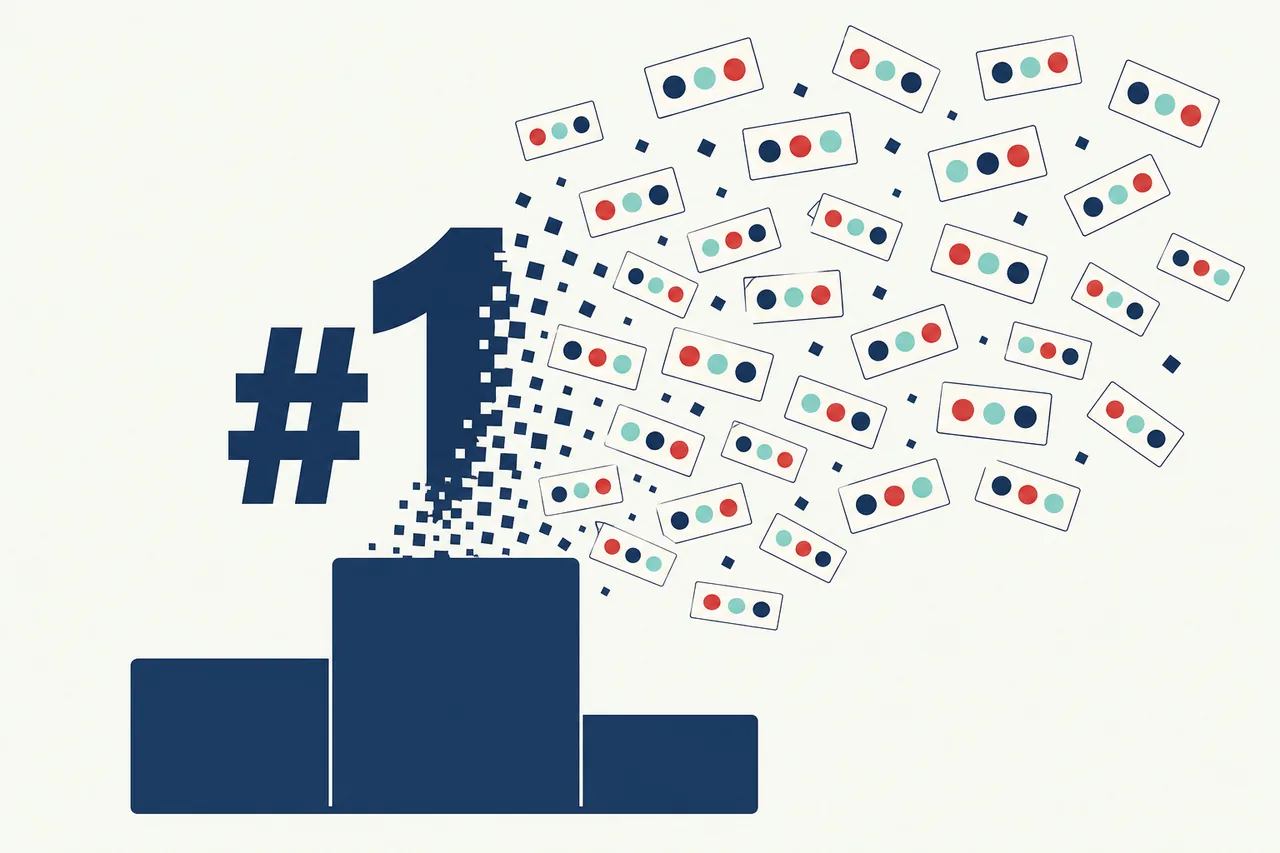
Classic search trained marketers to think in positions. Position one. Position three. Searchable’s article on AI visibility tracking says AI answers do not work like that, because they have no fixed positions. It puts the point bluntly: “Any tool that claims to show your ‘AI rank’ is selling noise as signal.”
The supporting figure comes from SparkToro, cited in the same Searchable article. Fewer than 1 in 1,000 of 2,961 runs produced the same list.
What replaces the rank
Searchable’s GEO vs SEO vs AEO article says this kind of visibility is measured probabilistically, through iterative testing. Its tracking article suggests visibility frequency across 60 to 100 or more prompt runs instead of a single position. The measure becomes how often a brand appears, not where.
Warning. Searchable’s own pages pull the other way. The home page says “ranking improvements typically begin within 2-4 weeks”, and the Prompts feature reports an average position per prompt. Whether an average across many runs differs from an AI rank is for readers to judge, but the tension is real.
Backlinks Alone Do Not Explain Who Gets Cited
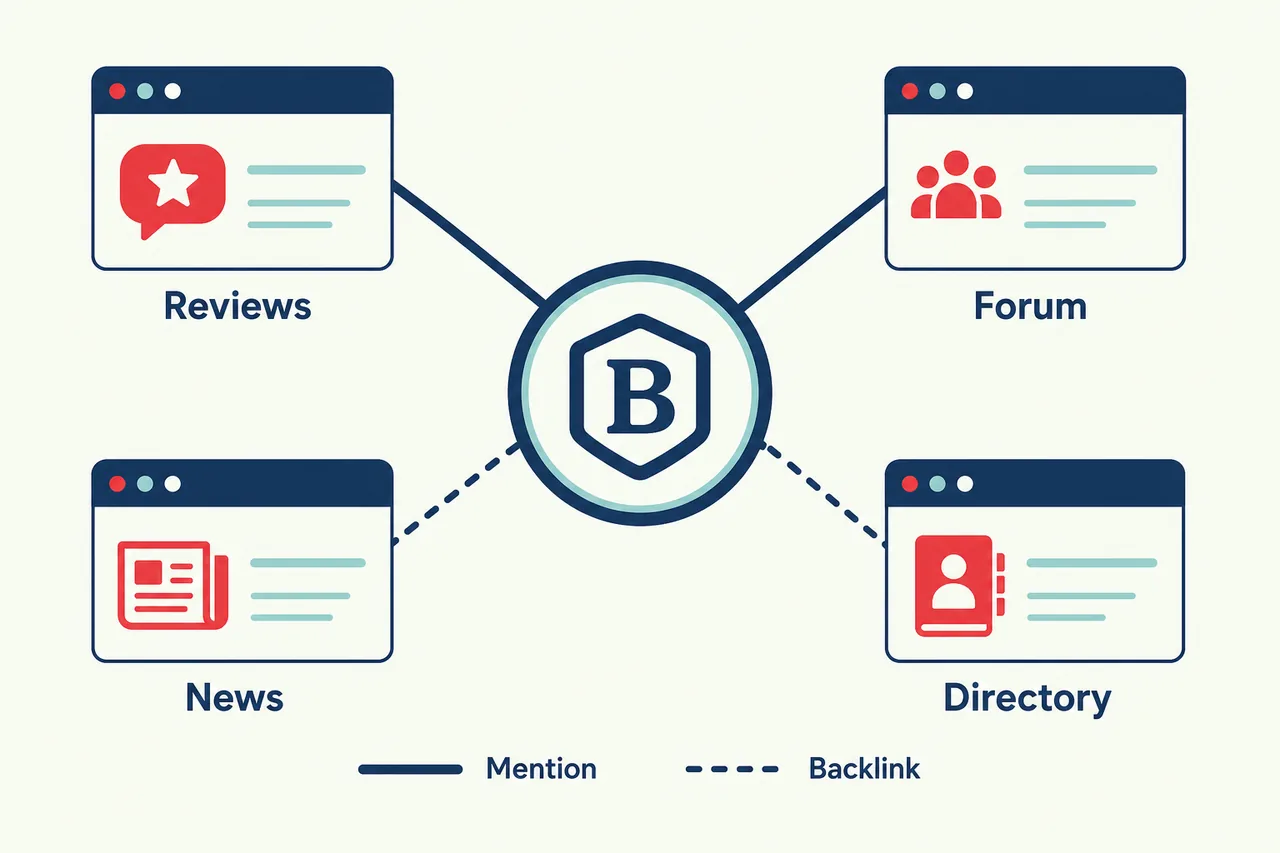
The fourth myth says link building is all AI visibility needs. Searchable’s article on AI citations and backlinks cites an Ahrefs study of 75,000 brands in which web mentions correlated with AI visibility at 0.664, against 0.218 for backlinks.
Links still sit in the chain
The same article does not discard backlinks. It describes a trust chain with four links, each feeding the next.
- Backlinks
- Rankings
- Citation eligibility
- Brand authority
How much top-10 rankings matter
Searchable’s articles do not agree on one number for the share of AI Overview citations that come from top-10 pages. Read them as a range of studies.
| Searchable article | Basis | Share from top-10 pages |
|---|---|---|
| GEO vs SEO vs AEO | A study of 863,000 keywords, cited in the article | About 38% |
| Rank in AI Overviews | Searchable’s own SERP sample, 12 of 24 URLs | 50% |
| AI citations vs backlinks | Outside research cited in the article | About 76% |
Where mentions come from
If mentions carry weight, the next question is where they live. Searchable’s public data hub groups the sources cited by ChatGPT, Google AI Overviews and Perplexity into four categories.
- Social and community sites
- B2B review sites
- Knowledge and reference sites
- News
Rankings help. They do not settle the question. Mentions on other sites appear to carry weight too, and a backlink-only plan ignores most of that list.
Searchable.com’s Advice Still Needs a Careful Read
Searchable is a vendor. Its blog articles are brand research and brand opinion, and several figures they quote come from third parties the company did not produce. That does not make the advice wrong. It means the myths above are answered mainly by Google’s documentation and outside studies, with Searchable as supporting commentary.
Even the academic work is hedged. The 2024 KDD paper that introduced Generative Engine Optimization reported methods that could boost visibility “up to 40%”, but found that effectiveness varied by domain. A single tactic that works everywhere is not what the research describes.
Caveat. Two product limits matter for anyone testing these ideas in the platform. The pricing page treats ChatGPT, Google AI Overviews and Perplexity as core engines, with Microsoft Copilot, Claude and Grok as add-ons. The LLM Analytics feature, which reports AI crawler activity, is marked beta.
Searchable’s AEO Insights page says “AI visibility does not live in one metric.” On that point, at least, the product copy and the blog agree.
A Checklist for Testing the Next Discoverability Claim
Any new shortcut can be put through the same tests used on the four myths above.
Example. Illustrative only. A pitch says that adding a new file to a site will lift its AI rank within a month. It fails three of the questions below at once: no engine documentation backs it, it assumes a single rank, and it offers a file in place of content.
A claim that clears every question is not proven, but it has earned a test. One that fails several is often one of the four myths above in newer language. Run each new claim through these questions before changing a site.
- Does the engine’s own documentation support it, or only a vendor article?
- Is the figure Searchable’s own research, or a third-party figure cited in a Searchable article?
- Does the claim cover one engine, or all of them?
- Is a position being reported from one run, or averaged across many?
- Is a file or markup being offered as a substitute for content worth citing?
- Do other studies on the same question report a different number?